
Work History: Microsoft Turn 10 Studios - Software Engineer Intern
What I did as a Software Engineer Intern at Microsoft Turn 10 Studios from 2014-05 to 2014-08.Skills: C++ and XAML
Working on Forza Horizon 2 was the moment I stepped into the life I'd always wanted. It was my first real job in the games industry. Forza Horizon 2 was developed by a second party studio, Playground Games, who Turn 10 would later acquire. In addition to working with the local staff in Redmond, WA, I worked with exceptional partners across the ocean in Royal Leamington Spa, UK.
My responsibility was polishing the Car Clubs feature to AAA quality before release. I inherited this system from an excellent developer, James Parsons, who walked me through it's architecture. I was glad to see that I was inheriting something that had been built well and even happier to see the care Turn 10 developers put into their work.
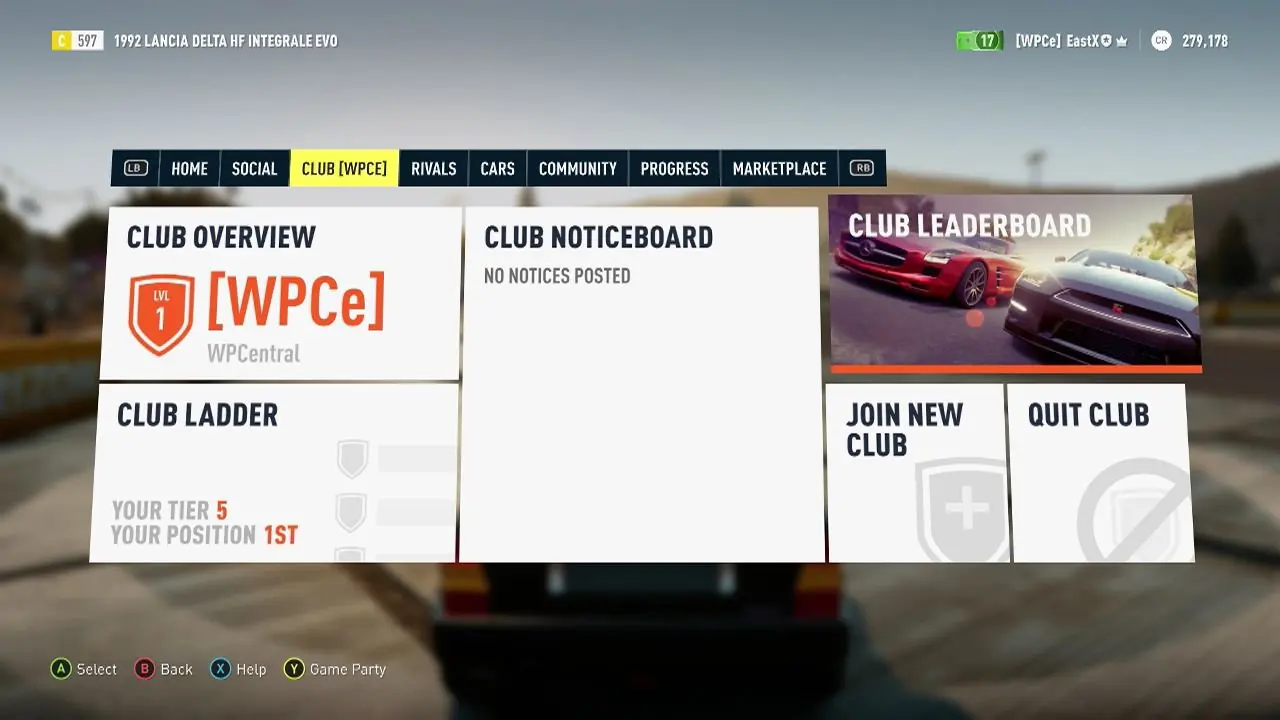
Car Clubs was one of Forza Horizon 2's major social features: players could form clubs, customize their tag and emblem, climb leaderboards, and compete with rival's across the world.
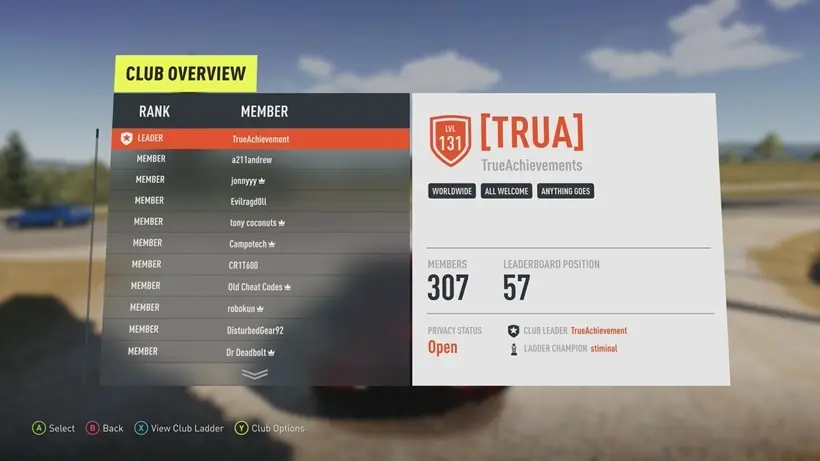
The feature was built in C++ and XAML using WPF for Games (WPFG)--an internal, game-optimized rewrite of the WPF stack created by Greg Hermann. It gave us XAML's productivity but tuned for console performance, hand-crafted by decompiling the original .NET assemblies and re-implementing them in C++.
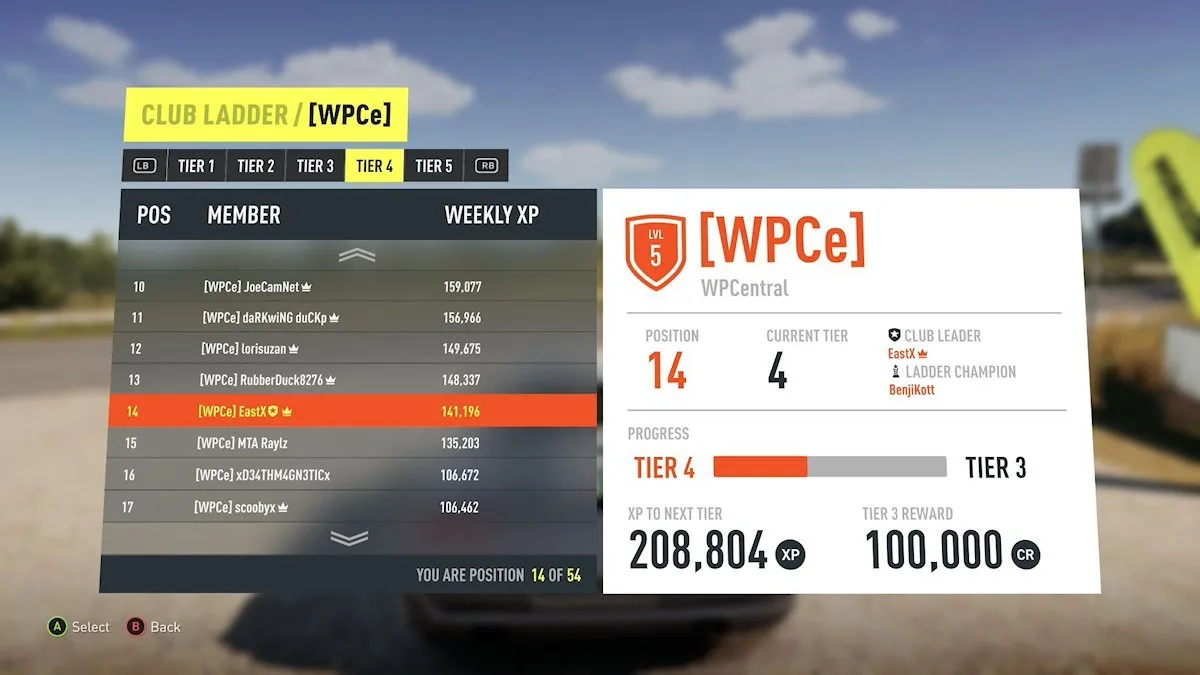
Most days, I worked at the intersection of backend and UI: wiring APIs into XAML views, tightening performance, and smoothing UX details so clubs felt fast, responsive, and social. For example, API-powered pagination allowed the club ladder to scale cleanly to 1,000 players without hitching.
Beyond Car Clubs, I jumped around the codebase fixing bugs, optimizing flows, and adding polish wherever the game needed an extra push in its final stretch. It was the kind of work where you go home exhausted but grinning, because you know you're building something special for players.
I was still in college when the game launched, and I remember spotting our box on TV shelves at parties. Listening to friends talk about how much they loved the game, and their experience in Car Clubs, felt surreal.